Thank You
STATSTRO 2026 has come to a close. Over two days at the University of Toronto, our keynote speakers, tutorial leaders, contributed and lightning-talk presenters, poster authors, and attendees — joining us both in person and online from across the Great Lakes region, Canada, and around the world — came together to explore sampling, simulation, and scientific discovery.
To everyone who spoke, taught, presented, asked a sharp question, or simply shared an idea over coffee: thank you. You made this a warm, rigorous, and genuinely interdisciplinary gathering. The speaker slides and hands-on tutorial materials remain freely available, and we hope to see you at a future edition.
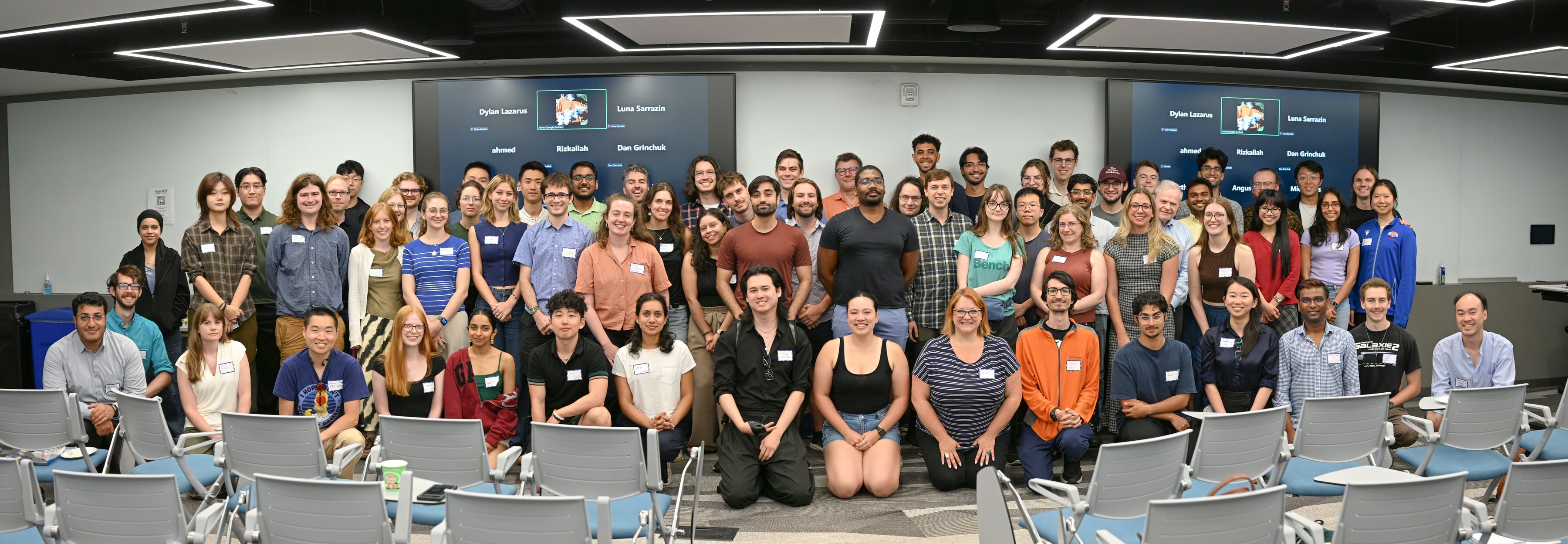
— The STATSTRO Organizing Committee
About the Workshop
STATSTRO (formerly Stellar Stats) is an annual interdisciplinary workshop that brings together statisticians, astronomers, members of the broader scientific community, and particularly early-career researchers working on interdisciplinary research in astrostatistics and astroinformatics.
Building on the Stellar Stats workshops (2021–2023) and previous STATSTRO editions (2024–2025), the workshop fosters connections between the Department of Statistical Sciences (DoSS), the Data Sciences Institute (DSI), and the astronomy communities of DADDAA, Dunlap, and CITA at the University of Toronto. This year's edition expanded the workshop into an international 2-day gathering, with a focus on communities around the Great Lakes area in the US and across Canada — though it was open to participants from anywhere in the world, both in person and remotely.
This year's theme, Sampling, Simulation, and Scientific Discovery, explores how modern sampling methods, computational simulations, and statistical inference are driving new discoveries across the sciences. The extended format allowed for longer tutorials, more in-depth discussions, stronger recruitment of statistics and machine learning researchers, and deeper engagement from both local and international participants.
Each of the four thematic sessions featured a keynote overview talk, a hands-on coding tutorial (Jupyter/Colab), and a contributed science presentation. Each day also brought a round of lightning talks from early-career researchers — each paired with a poster — followed by a dedicated poster session over the extended midday break. There was no registration fee, and catered meals and networking activities provided ample opportunities for cross-disciplinary connections.
Thematic Sessions
-
Deep Learning Day 1Deep learning for scientific applications, including neural networks as emulators and surrogates, interpolation, extrapolation, and generalizability.
-
Uncertainty Quantification Day 1Strategies for quantifying uncertainty across frequentist and Bayesian frameworks, including conformal prediction methods.
-
Sampling Techniques Day 2Modern MCMC methods for scientific applications, with a focus on scaling to high dimensions and large datasets.
-
Simulation-Based Inference Day 2Inference with intractable likelihoods using both traditional methods and neural approaches such as normalizing flows and diffusion models.
Speakers
Deep Learning
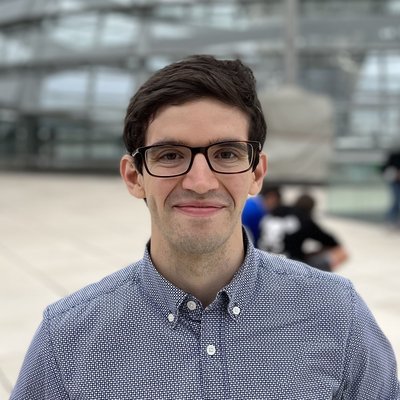
Ricardo Baptista
University of Toronto
Keynote Speaker"Successes and Challenges of Posterior Sampling with Score-Based Diffusion Models"
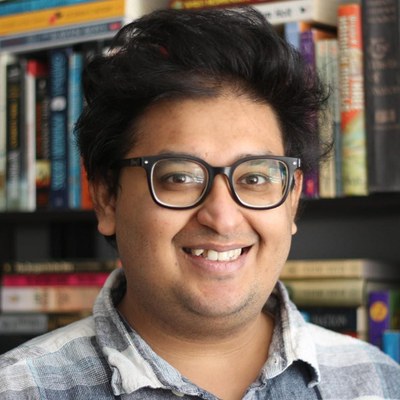
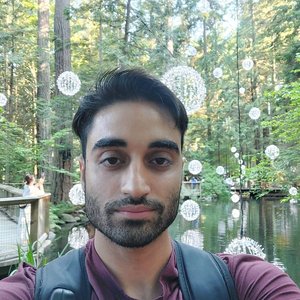
Ali SaraerToosi
University of Toronto
Contributed Speaker"NeuralDMD: Interpretable Neural Representation of Dynamics from Sparse and Noisy Measurements"
Uncertainty Quantification
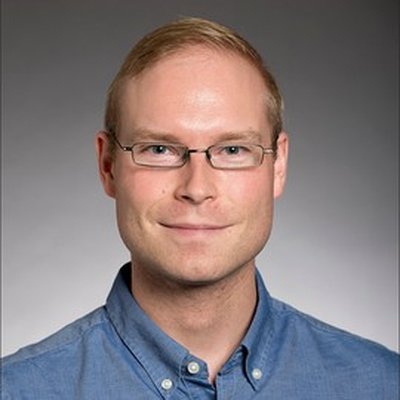
Mikael Kuusela
Carnegie Mellon University
Keynote Speaker"Statistical Foundations of Uncertainty Quantification for Physicists in the Era of Machine Learning"

Biprateep Dey
University of Toronto
Tutorial Leader"A Practitioner's Guide to Uncertainty Quantification"
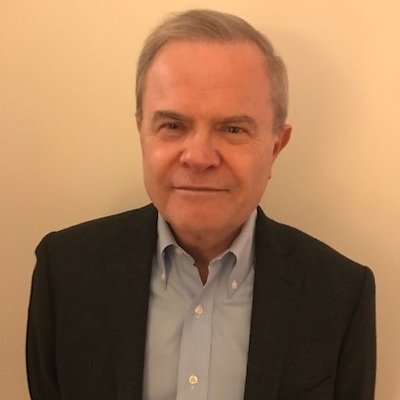
Michael Evans
University of Toronto
Contributed Speaker"Confidence, Statistical Evidence and Relative Belief with Applications to a Problem in Particle Physics"
Sampling Techniques
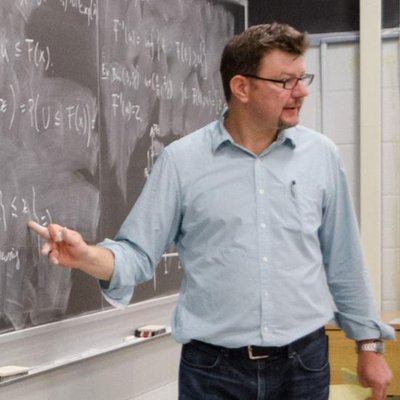
Radu Craiu
University of Toronto
Keynote Speaker"The Universe of Sampling: Notes from a Statistical Odyssey"
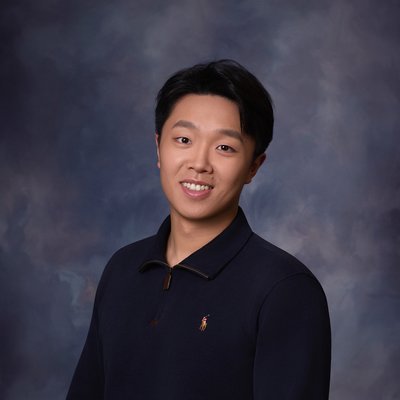
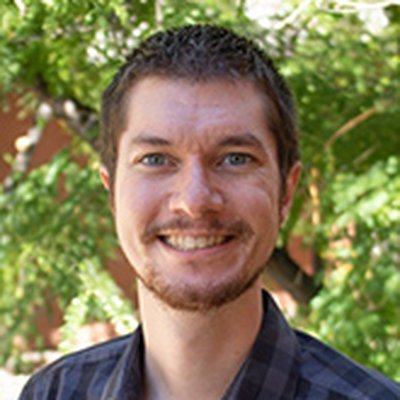
Peter Behroozi
University of Arizona
Contributed Speaker"The Ray Tracing Sampler: Bayesian Sampling of Neural Networks for Everyone"
Simulation-Based Inference
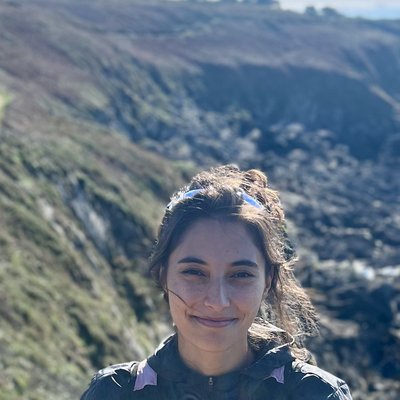
Justine Zeghal
Université de Montréal
Keynote Speaker"From Simulations to Posteriors: A Tour of Simulation-Based Inference"
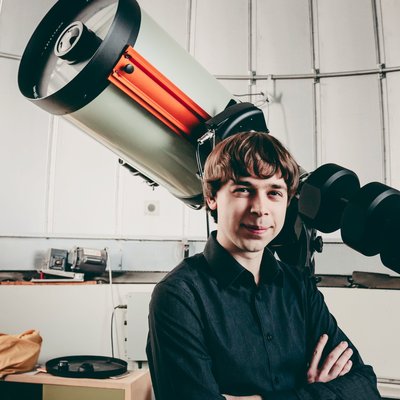
Connor Stone
University of Toronto
Tutorial Leader"Building Forward Models for Astronomical Applications in the caskade Ecosystem"
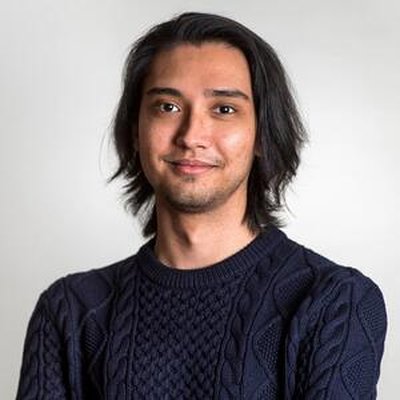
Lawrence Faria
Queen's University
Contributed Speaker"Simulation-Based Inference for HI Kinematics in Ultra-Diffuse Galaxies"
Schedule
All times in Eastern Daylight Time (EDT, UTC-4)
Registration & Setup
Check-in, coffee, and poster setup
Opening Remarks
Successes and Challenges of Posterior Sampling with Score-Based Diffusion Models
Keynote TalkRicardo Baptista — University of Toronto
Deep Learning
Keynote overview talk — 60 min
Break
How Do You Know What Your Models Are Learning?
TutorialKartheik Iyer — Columbia University
Deep Learning
Hands-on coding tutorial — 45 min (Jupyter/Colab), delivered remotely
NeuralDMD: Interpretable Neural Representation of Dynamics from Sparse and Noisy Measurements
Contributed TalkAli SaraerToosi — University of Toronto
Deep Learning
Contributed science talk — 30 min
Lightning Talks
Lightning8 × 1-minute lightning talks (5 min changeover) — a one-minute preview of every poster on display today
Lunch & Networking
Group photo, then catered lunch. Posters are up — take an extended break and start browsing before the dedicated session.
Poster Session
PosterDedicated poster viewing — meet the presenters behind today's lightning talks
Statistical Foundations of Uncertainty Quantification for Physicists in the Era of Machine Learning
Keynote TalkMikael Kuusela — Carnegie Mellon University
Uncertainty Quantification
Keynote overview talk — 60 min
Break
A Practitioner's Guide to Uncertainty Quantification
TutorialBiprateep Dey — University of Toronto
Uncertainty Quantification
Hands-on coding tutorial — 45 min (Jupyter/Colab)
Confidence, Statistical Evidence and Relative Belief with Applications to a Problem in Particle Physics
Contributed TalkMichael Evans — University of Toronto
Uncertainty Quantification
Contributed science talk — 30 min
Registration & Setup
Check-in, coffee, and poster setup
The Universe of Sampling: Notes from a Statistical Odyssey
Keynote TalkRadu Craiu — University of Toronto
Sampling Techniques
Keynote overview talk — 60 min
Break
Bayesian Workflow Using PyMC
TutorialYichen Ji — University of Toronto
Sampling Techniques
Hands-on coding tutorial — 45 min (Jupyter/Colab)
The Ray Tracing Sampler: Bayesian Sampling of Neural Networks for Everyone
Contributed TalkPeter Behroozi — University of Arizona
Sampling Techniques
Contributed science talk — 30 min
Lightning Talks
Lightning7 × 1-minute lightning talks (5 min changeover) — a one-minute preview of every poster on display today
Lunch & Networking
Catered lunch. Posters are up — take an extended break and start browsing before the dedicated session.
Poster Session
PosterDedicated poster viewing — meet the presenters behind today's lightning talks
From Simulations to Posteriors: A Tour of Simulation-Based Inference
Keynote TalkJustine Zeghal — Université de Montréal
Simulation-Based Inference
Keynote overview talk — 60 min
Break
Building Forward Models for Astronomical Applications in the caskade Ecosystem
TutorialConnor Stone — University of Toronto
Simulation-Based Inference
Hands-on coding tutorial — 45 min (Jupyter/Colab)
Simulation-Based Inference for HI Kinematics in Ultra-Diffuse Galaxies
Contributed TalkLawrence Faria — Queen's University
Simulation-Based Inference
Contributed science talk — 30 min
Closing Remarks
Wrap-up & next steps
Slides & Tutorial Materials
Speakers and tutorial leaders generously shared the materials below, which remain freely available to revisit and reuse.
Tutorial Materials
Each thematic session included a hands-on coding tutorial. The materials below were shared by the tutorial leaders.
How Do You Know What Your Models Are Learning?
Kartheik Iyer — Columbia University
View materialsA Practitioner's Guide to Uncertainty Quantification
Biprateep Dey — University of Toronto
View materialsBayesian Workflow Using PyMC
Yichen Ji — University of Toronto
View materialsBuilding Forward Models for Astronomical Applications in the caskade Ecosystem
Connor Stone — University of Toronto
View materialsPosters & Lightning Talks
Each poster was previewed by a 1-minute lightning talk just before lunch, followed by a dedicated poster viewing session after lunch. Posters were grouped by thematic session and split across the two days.
Day 1 — Thursday, July 16 8 posters
Deep Learning
David Bromley
University of Toronto
“Spacetime Tomography via Learned Geodesics and Differentiable Rendering”
Nolan Koblischke
University of Toronto
“Vision-Language Models for Astrophysics”
Isabelle Laing
University of Toronto
“DOROTHY: A Stellar Catalogue for 13 Million Milky Way Stars from a Machine-Learning Pipeline”
Uncertainty Quantification
Alexandros Pratsos
University of Toronto
“Characterizing Stellar Streams with Error-Aware Machine Learning”
Benjamin Naeve Velguth
Dartmouth College
“Detecting Evidence of Hierarchical Structure Formation Around Dwarf Galaxies: Current and Future Observations”
Tanveer Karim
University of Toronto
“Is Dark Energy a Cosmological Constant? A Log Predictive Density Perspective”
Alexandra Rochon
McMaster University
“Understanding the Impact of Cold Gas Giants on the Formation of Super-Earths and Sub-Neptunes with Astrometry”
Megan Oxland
McMaster University
“Tracing Satellite Galaxy Evolution Across Cosmic Time”
Day 2 — Friday, July 17 7 posters
Sampling Techniques
Andrea Crespi
University of Waterloo
“Efficient Gradient-Based Sampling for Cosmological Field-Level Inference”
Mohan Agrawal
McGill University
“How to Generate Exact 1/fᵅ-Type Noise over an Arbitrary Number of Frequency Decades Without Running Out of Memory”
Bennett Neil Skinner
McMaster University
“Inferring Planet Compositions Using Statistical Methods”
Vincent Hénault-Brunet
Saint Mary's University
“Orbit-Based Constraints on the Mass and Position of an IMBH in Omega Centauri from Fast-Moving Stars”
Nasser Mohammed
University of Toronto
“Bayesian Mixture Modelling to Characterize Stellar Streams”
Simulation-Based Inference
Jennifer Y. H. Chan
Oberlin College
“Directional Multiscale Tools for Inference on the Sphere: From Wavelets to Curvelets with S2LET”
Callista Sullivan
Queen's University
“Can Simulation-Based Inference Reshape the Search for Structured Protostellar Disks?”
Thank you to all of our poster presenters and lightning-talk speakers for sharing their work across the two days.
Venue & Travel
Location
Department of Statistical Sciences
700 University Avenue, 9th–10th floors
Toronto, ON
WiFi
Visitors connected via eduroam. UofT guest WiFi credentials were provided at registration for those without eduroam access.
Tutorials
The hands-on coding sessions ran in Jupyter/Colab. The tutorial materials are now freely available to revisit.
Accessibility
The venue is wheelchair accessible.
Getting There
700 University Avenue is located in downtown Toronto, easily accessible by TTC subway (Queen's Park station on Line 1) or streetcar (College St or Dundas St).
Attendance & Logistics
STATSTRO 2026 has now taken place and registration is closed. Thank you to everyone who joined us — in person and online. See the recap and group photo and the speaker slides and tutorial materials above.
All participants were asked to follow our Code of Conduct.
In-Person & Remote Attendance
STATSTRO was a hybrid workshop with in-person and remote (Zoom) attendance. Registered participants received the Zoom link and logistics by email — the same link worked for both days.
Meals & Refreshments
Lunches on both days were catered and designed for networking. Snacks and beverages were provided during all breaks.
Conference Dinner (Day 1)
A conference dinner was held on Thursday, July 16 at 6:30 pm at Rikki Tikki (71 Jarvis St). Seats were allocated by lottery through the dinner sign-up form; confirmed guests received details by email.
Contributed Talks
Each thematic session featured a 30-minute contributed science talk from an invited researcher. See the schedule for this year's contributed speakers, and the shared slides folder for the decks presenters chose to share.
Tutorials
Each thematic session included a 45-minute hands-on coding tutorial (Jupyter/Colab). The tutorial materials shared by the leaders are now freely available.
Lightning Talks
Each day featured a round of rapid-fire 1-minute lightning talks from early-career researchers — one for each poster — held just before lunch as a preview of the day's posters. See the Posters & Lightning Talks section for the full lineup.
Poster Session
Every lightning talk had an accompanying poster, with a dedicated viewing session right after lunch each day. See the Posters & Lightning Talks section for who presented.
Sponsors & Host Organizations
Generously sponsored by

Organizing Committee
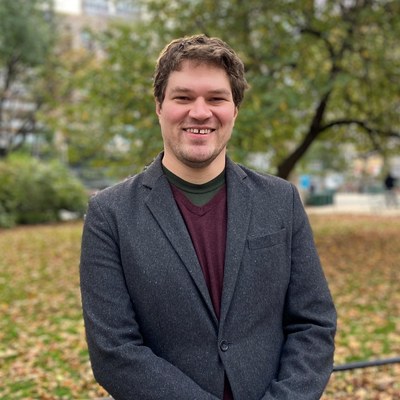
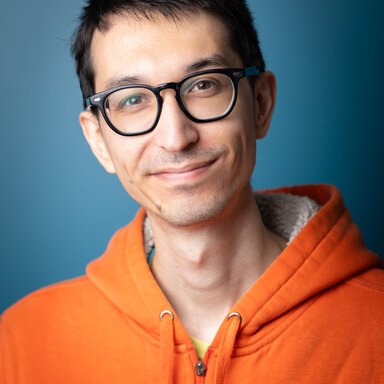
Josh Speagle
Co-Chair
Dept of Statistical Sciences / David A. Dunlap Dept of Astronomy & Astrophysics, UofT
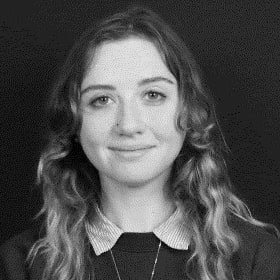
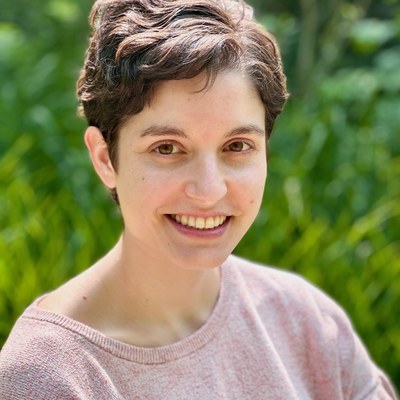
Mairead Heiger
Committee Member
Past Editions
STATSTRO 2025
"Wrangling Data: Big and Small"
May 2025 — University of Toronto
STATSTRO 2024
"The AIstronomy Revolution"
April 2024 — University of Toronto
Stellar Stats
2021–2023
University of Toronto